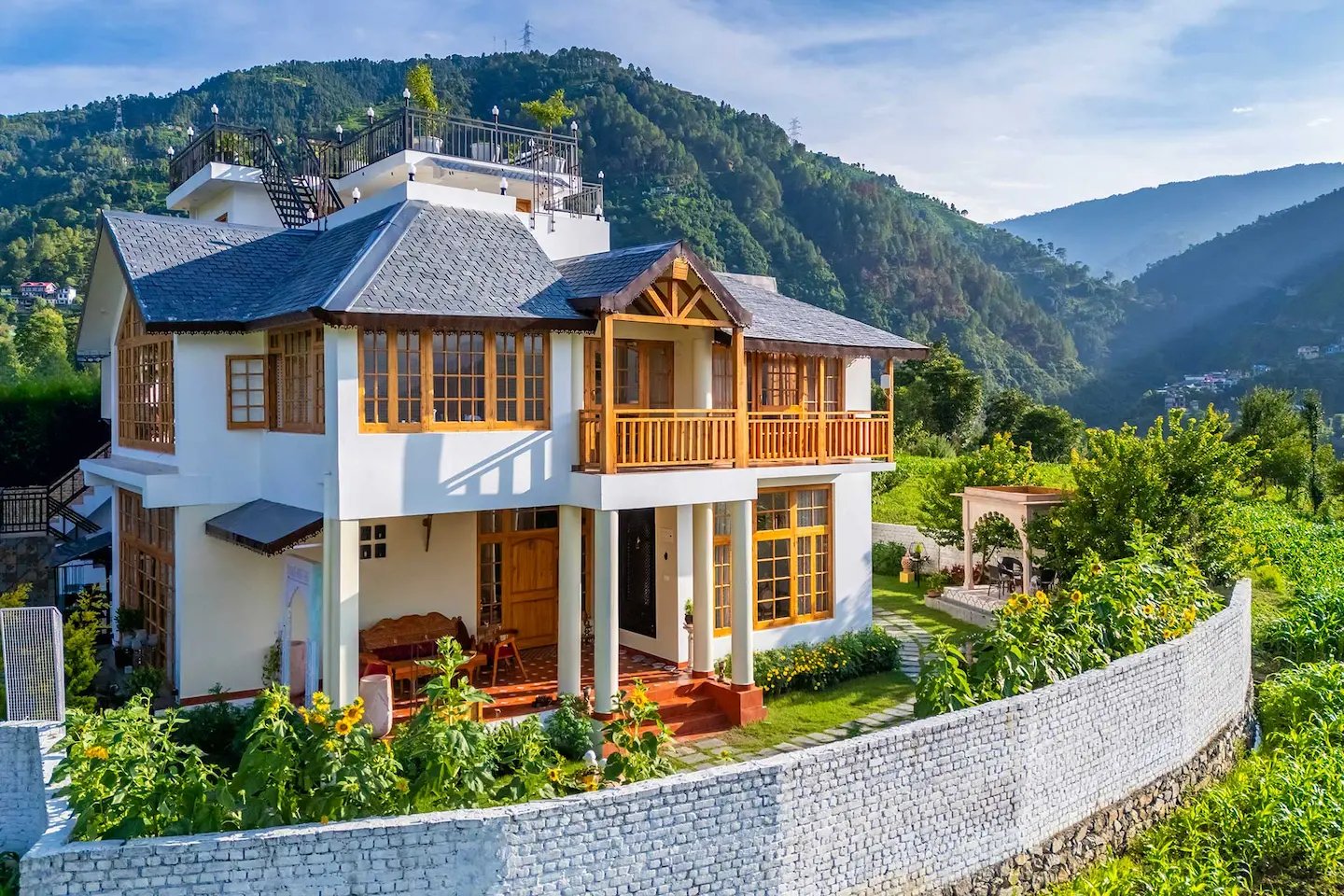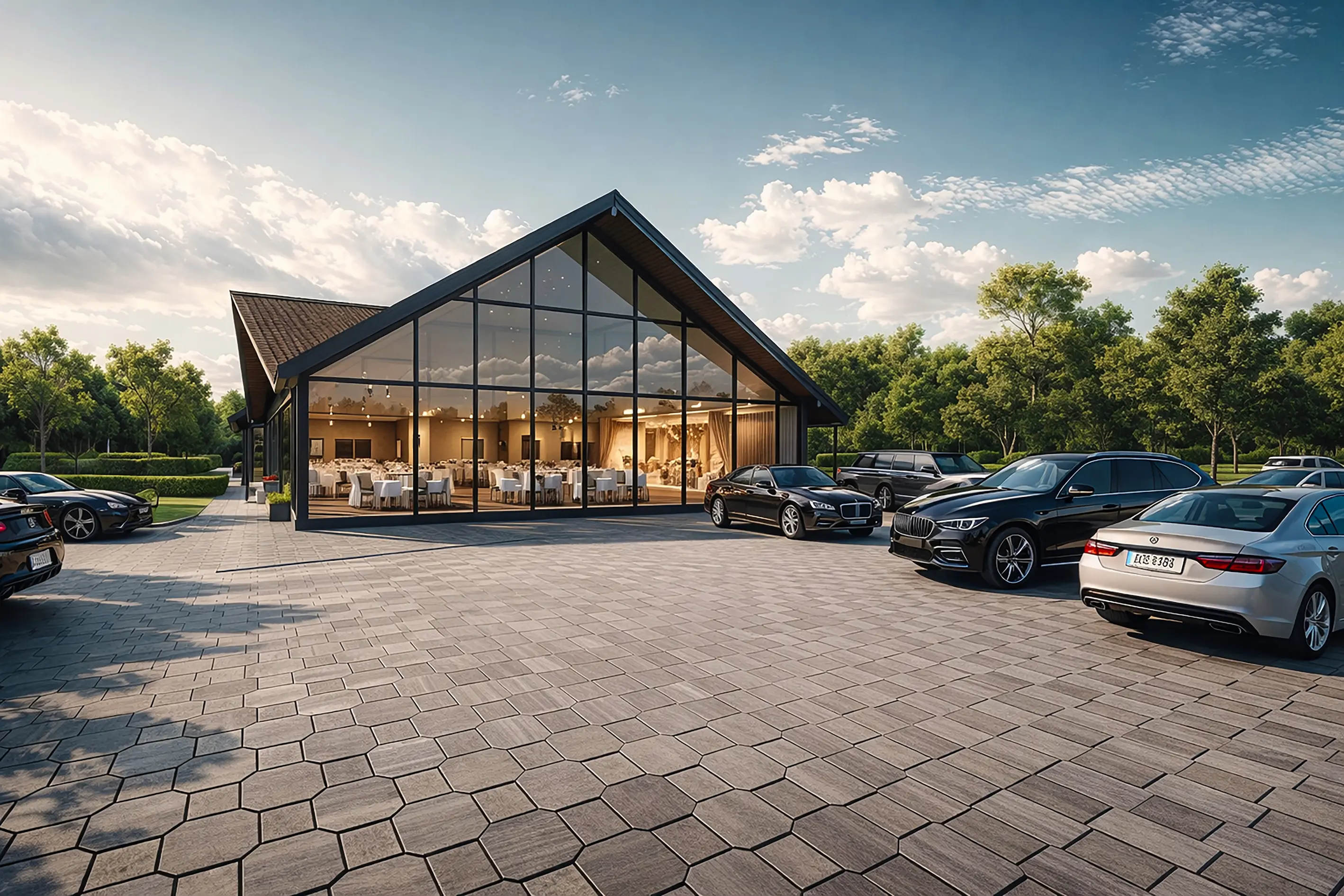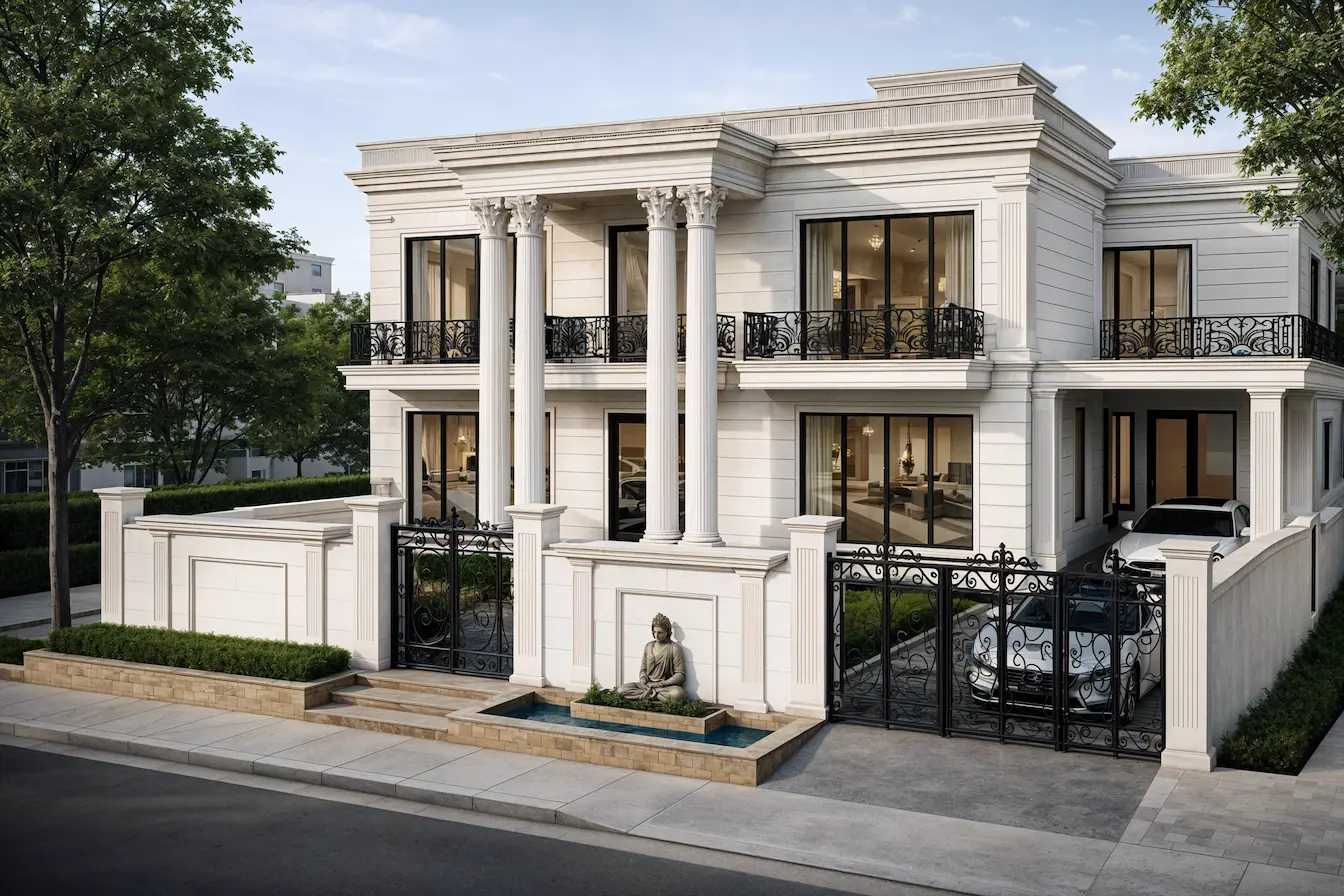
For Delhi's families, a farmhouse is no longer just a weekend escape on the edge of the city. It is a private estate — somewhere to breathe, to host, to swim under an open sky an hour from the chaos of the capital. Designing one well is part architecture, part landscape, and part lifestyle.
Across the NCR — in Chhatarpur, Kapashera, Mehrauli, Westend Greens, Pushpanjali and the Sohna and Gurugram belts — a new generation of farmhouses is being built that owes as much to luxury resorts as to the old colonial farm bungalow. Clients want clean contemporary architecture, resort-style pools and gardens, space to entertain a hundred guests, and the quiet privacy that only acres of land can give.
This guide covers farmhouse design in Delhi NCR end to end — the styles that work, how to plan the layout, the features that matter, what it costs to build, and the land and zoning rules you must understand before you start.
What Makes a Farmhouse Different From a Home
The defining feature of a farmhouse is the land. Where a city home or a luxury villa works hard to extract space from an expensive urban plot, a farmhouse sits on an acre or more of farmland where the building is the smaller part of the story and the landscape is the larger one. Zoning rules reinforce this — only a limited portion of a farm plot can be built upon, so most of the land stays green.
That changes how you design. A farmhouse is planned around the land and outdoor living — the approach, the lawns, the pool, the views, the way a party flows from indoors to the garden — rather than the land being squeezed around the building. Get that relationship right and everything else follows.
Farmhouse Design Styles That Work in NCR
There is no single "farmhouse look" any more. The styles we see most often in Delhi NCR briefs are:
- Modern farmhouse — clean lines, flat or low roofs, floor-to-ceiling glass, and a warm, rustic palette of stone, wood and lime plaster. The most popular contemporary choice.
- Contemporary resort — low-slung pavilions, water features, deep verandahs and a strong indoor-outdoor flow, borrowing directly from luxury hospitality design.
- Mediterranean villa — arches, terracotta, courtyards and textured walls, suited to the NCR climate and a relaxed, sun-filled mood.
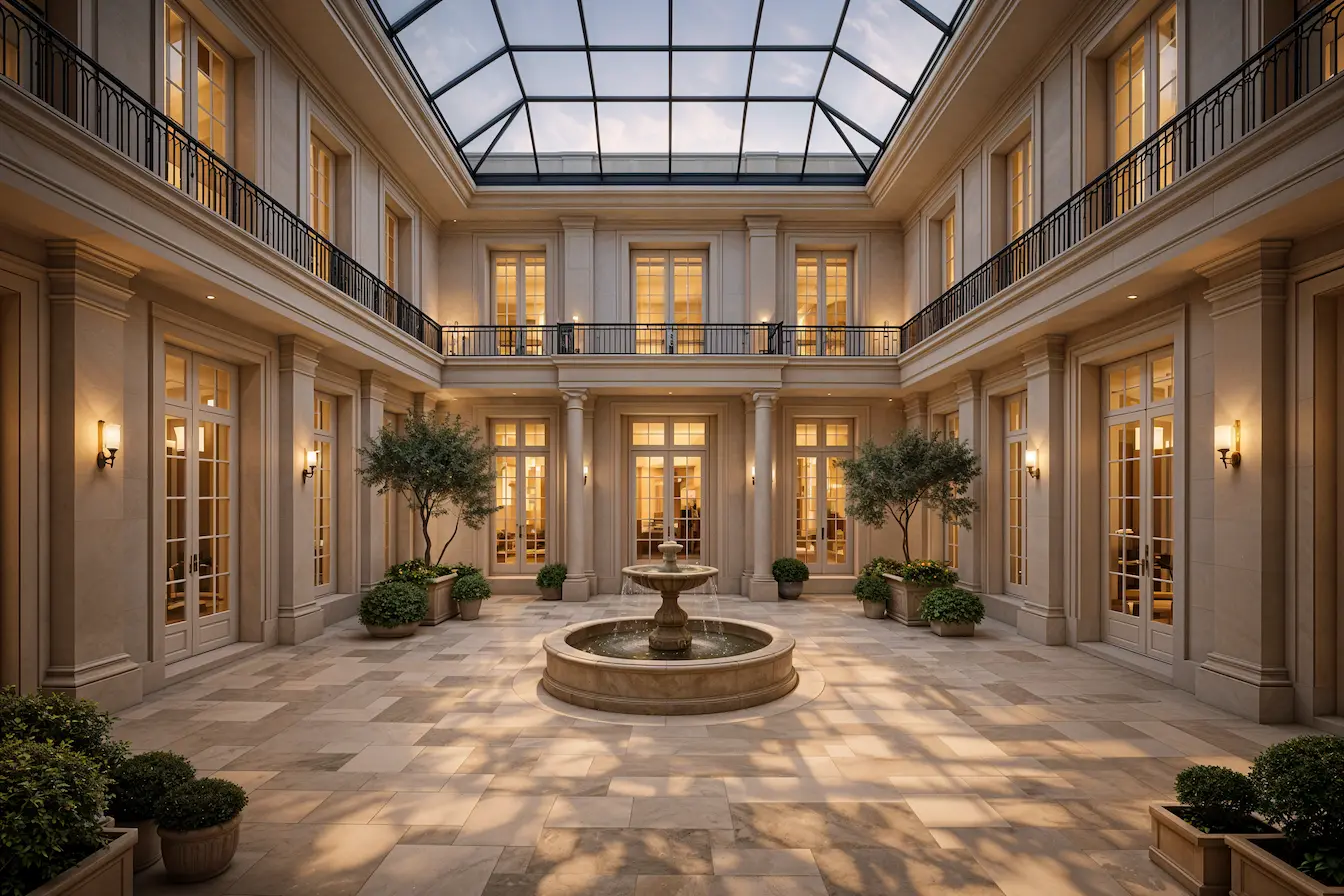
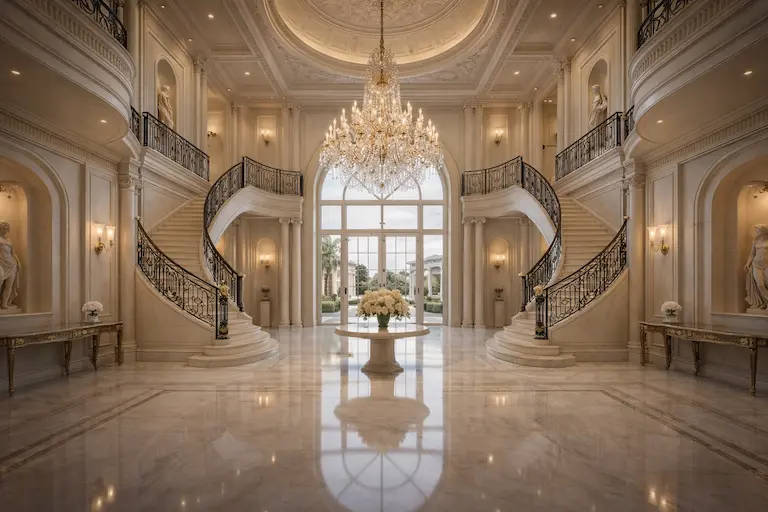
- Classical / neo-classical — columns, symmetry and grandeur, for clients who want their farmhouse to read as a stately estate.
Whatever the style, the homes that age best share one quality: they respond to the site and the climate rather than copying a picture from abroad. A contextual, climate-responsive design stays cooler, costs less to run, and feels rooted in its place.
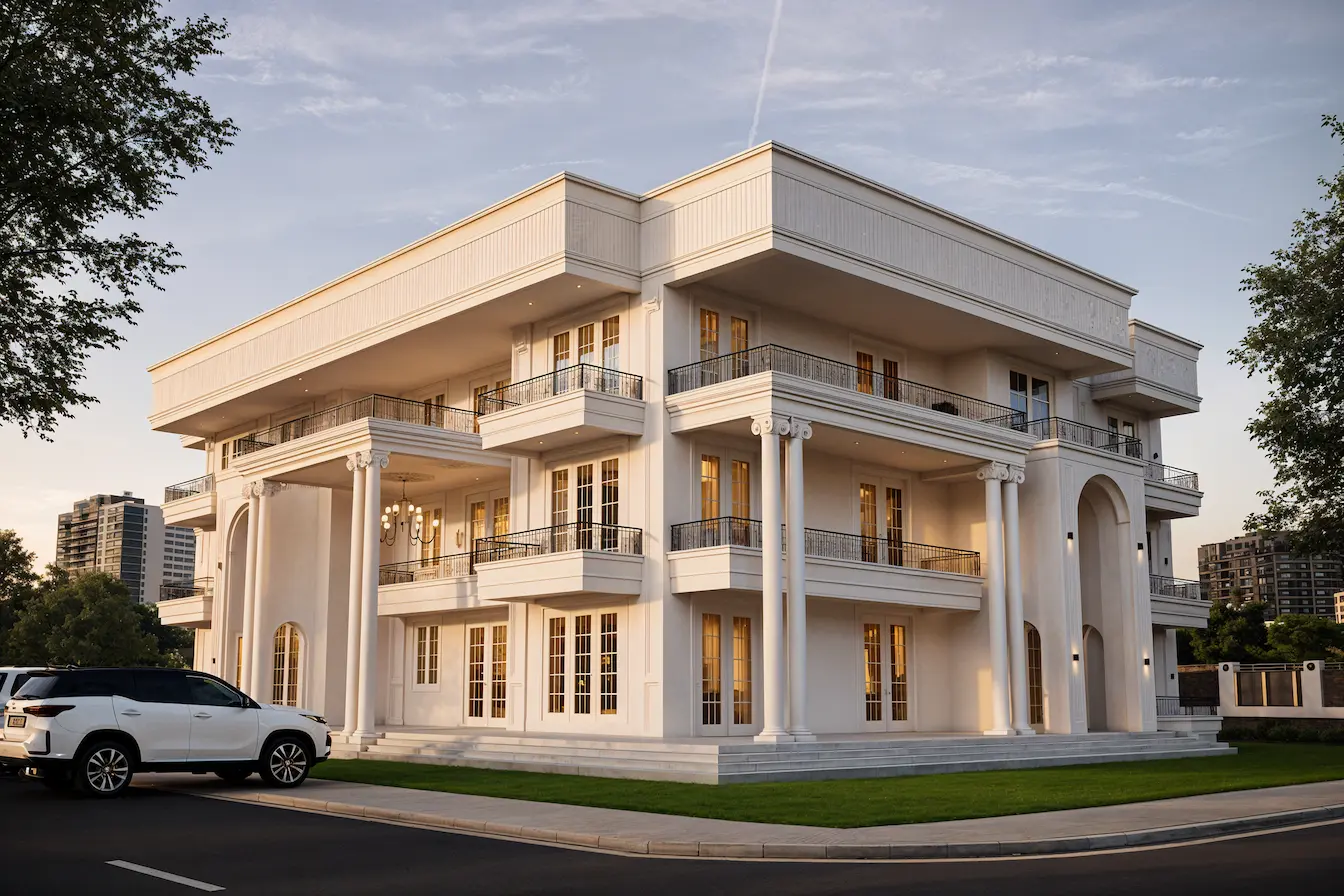
Planning the Layout — The Zones of a Great Farmhouse
A well-designed farmhouse is zoned much like a small resort, so that family life, entertaining and service never collide. The key zones are:
- Arrival — a gated, landscaped approach and porch that builds a sense of occasion and reveals the house gradually.
- The main house — living, dining and family bedrooms, oriented to the best views and the morning sun, opening directly onto the garden and pool.
- Entertainment & outdoor — the pool, party lawn, gazebo or pavilion, outdoor kitchen and bar — usually the real heart of an NCR farmhouse.
- Guest accommodation — separate guest rooms or a guest cottage that gives visitors privacy and the family its own space.
- Staff & service — staff quarters, utility, kitchen back-of-house, parking and plant, planned discreetly so they stay out of sight.
The discipline that separates a great farmhouse from a sprawling one is keeping the guest journey and the service journey apart — exactly the principle that governs resort and hospitality design. Guests should move through gardens and framed views; staff and supplies should move on their own routes the guests never notice.
The Features That Make a Farmhouse
Beyond the building itself, these are the elements clients ask for most — and the ones that define a luxury NCR farmhouse:
- Swimming pool — the centrepiece of outdoor life, ideally visible from the main living spaces and oriented for sun and privacy.
- Landscaped gardens & lawns — a large party lawn, mature trees, and planting that gives the estate its greenery and screening.
- Gazebo / entertainment pavilion — a shaded outdoor room for dining and gatherings, often with an outdoor kitchen.
- Indoor-outdoor living — large sliding glass, deep verandahs and level thresholds so the house opens completely to the garden.
- Wellness — a spa, gym, sauna or yoga deck, increasingly central to the modern farmhouse brief.
- Smart home & security — automation, CCTV and access control, important on large, perimeter-heavy plots.
- Sustainability — solar power, rainwater harvesting, and a borewell, which make sense both ecologically and on a property that runs largely off-grid.
What a Farmhouse Costs to Build in Delhi NCR
Farmhouse construction is quoted per square foot of built-up area, like any home — but the figure runs higher than a standard house because of the finish levels, the pool, the landscaping and the services a farmhouse demands. The 2026 ranges, excluding land, look like this:
| Quality Level | Cost / Sq Ft | What's Included |
|---|---|---|
| Standard | ₹2,000–3,000 | Quality build, good finishes, basic pool & landscape |
| Premium | ₹3,000–4,000 | Designer interiors, large pool, full landscaping, smart home |
| Luxury | ₹4,000–6,000+ | Bespoke architecture, imported materials, wellness, automation, guest block |
To put that in context, a 4,000 sq ft built-up luxury farmhouse typically costs ₹1.6–2.4 crore or more to build, before land and extensive landscaping. Two things to budget for separately: the land, which in the prime NCR farmhouse belts often dwarfs the construction cost, and the landscape, pool and boundary, which on a large plot is a major line item in its own right. For how the per-foot building cost itself breaks down, see our guide on house construction cost in Noida and NCR.
Land, Zoning & Approvals — Read This First
This is the part that trips up most first-time farmhouse owners. Farmhouses are built on agricultural land, and you cannot simply build whatever you like on it:
- Ground-coverage limits — zoning typically allows only a small percentage of a large farm plot to be built upon, with the rest kept as green/open land. This is why farmhouses sit on acres but have a modest building footprint.
- Minimum plot size — farmhouse policies usually specify a minimum land area, commonly an acre or more, depending on the authority.
- Land use & CLU — building may require the land to be cleared for farmhouse/residential use under the local policy, and in some cases a change of land use.
- Permits & charges — building-plan sanction, fire and structural approvals, labour cess and other authority charges apply.
The exact rules — coverage percentage, minimum plot, permissible height and CLU requirements — vary significantly across Delhi, Gurugram, Faridabad, Noida and the surrounding districts, and they change over time. Always verify the position for your specific plot with the local authority and a legal expert before you design or buy. An architect experienced in NCR farmhouses will plan the design around these limits from day one.
"On a farmhouse, the land is the luxury. Our job is to place the house so lightly and so cleverly on the plot that the building feels generous, the garden feels endless, and you forget you are an hour from Connaught Place."
Mistakes to Avoid in Farmhouse Design
The farmhouses that disappoint usually repeat the same errors — all of them decisions made at the design stage:
- Building too much — maxing out the footprint and losing the open land that makes a farmhouse a farmhouse.
- Ignoring orientation — placing the pool or the main living spaces where they bake in the afternoon sun instead of catching the morning light and breeze. Getting orientation right is also where Vastu and good design agree.
- Treating landscape as an afterthought — designing the building first and "doing the garden later," when the landscape should be planned with the house.
- Forgetting back-of-house — no proper staff, service or utility planning, so operations spill into the guest experience.
- Skipping the legal check — designing before confirming what the zoning actually permits, and having to redo everything.
Frequently Asked Questions
How much does it cost to build a farmhouse in Delhi NCR?
Excluding land, farmhouse construction in Delhi NCR costs roughly ₹2,000–3,000 per sq ft for a good standard build, ₹3,000–4,000 for premium, and ₹4,000–6,000+ per sq ft for a luxury farmhouse with bespoke architecture, a large pool, landscaping and smart-home systems. A 4,000 sq ft built-up luxury farmhouse therefore typically costs ₹1.6–2.4 crore or more to build, before land and extensive landscaping.
Can you build a house on agricultural land in Delhi NCR?
Farmhouses sit on agricultural or farmland, which is governed by zoning rules and ground-coverage limits — typically only a small percentage of a large plot may be built upon, with the rest kept green. The exact rules, minimum plot size and any change-of-land-use requirement vary by state and authority across the NCR, so verify the position for your specific plot with the local authority and a legal expert before designing or building.
What is the ideal plot size for a farmhouse in Delhi NCR?
Farmhouses are usually built on plots of one acre and above, and many premium estates run to two to five acres or more. Because zoning limits how much of the land can be built upon, most of a farmhouse plot is landscape — lawns, gardens, pool and orchard — which is exactly what gives a farmhouse its sense of space and privacy.
What features define a luxury farmhouse design?
A luxury Delhi NCR farmhouse typically includes a swimming pool, landscaped gardens and lawns, a gazebo or entertainment pavilion, large floor-to-ceiling glass for indoor-outdoor living, a separate guest and staff block, wellness facilities such as a spa or gym, smart-home automation, and sustainable systems like solar power and rainwater harvesting.
What is the difference between a farmhouse and a villa?
A villa is usually a premium home on an urban or gated-community plot, while a farmhouse sits on much larger agricultural land on the city's outskirts, where most of the plot is open landscape. As a result, a farmhouse is designed around the land and outdoor living — pool, lawns, entertaining and privacy — far more than a typical villa, and is often used as a weekend retreat or an estate for hosting.
An Estate Designed Around the Land
A great farmhouse is not the biggest building you can fit on the plot. It is the one that sits most gracefully on its land — that frames the views, opens to the garden, hosts effortlessly, and gives you the privacy and calm you came to the edge of the city to find. That outcome is set at the design stage, long before construction begins.
If you are planning a farmhouse anywhere in Delhi NCR and want a design that makes the most of your land, your budget and the rules that govern it, talk to our studio. We bring resort-grade thinking to private estates — from the first reading of the plot to the last tree in the garden — through our integrated architecture and interior design practice.