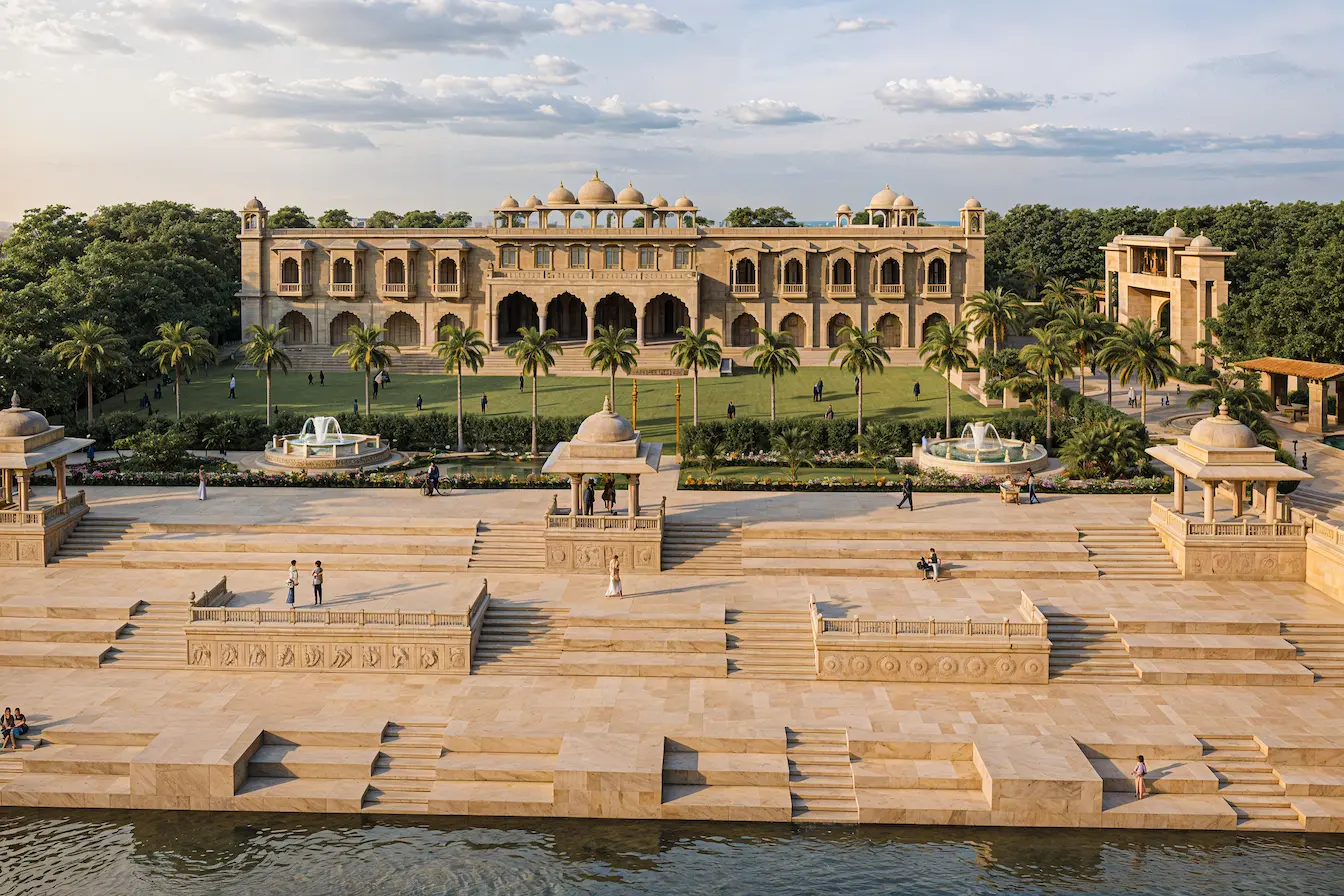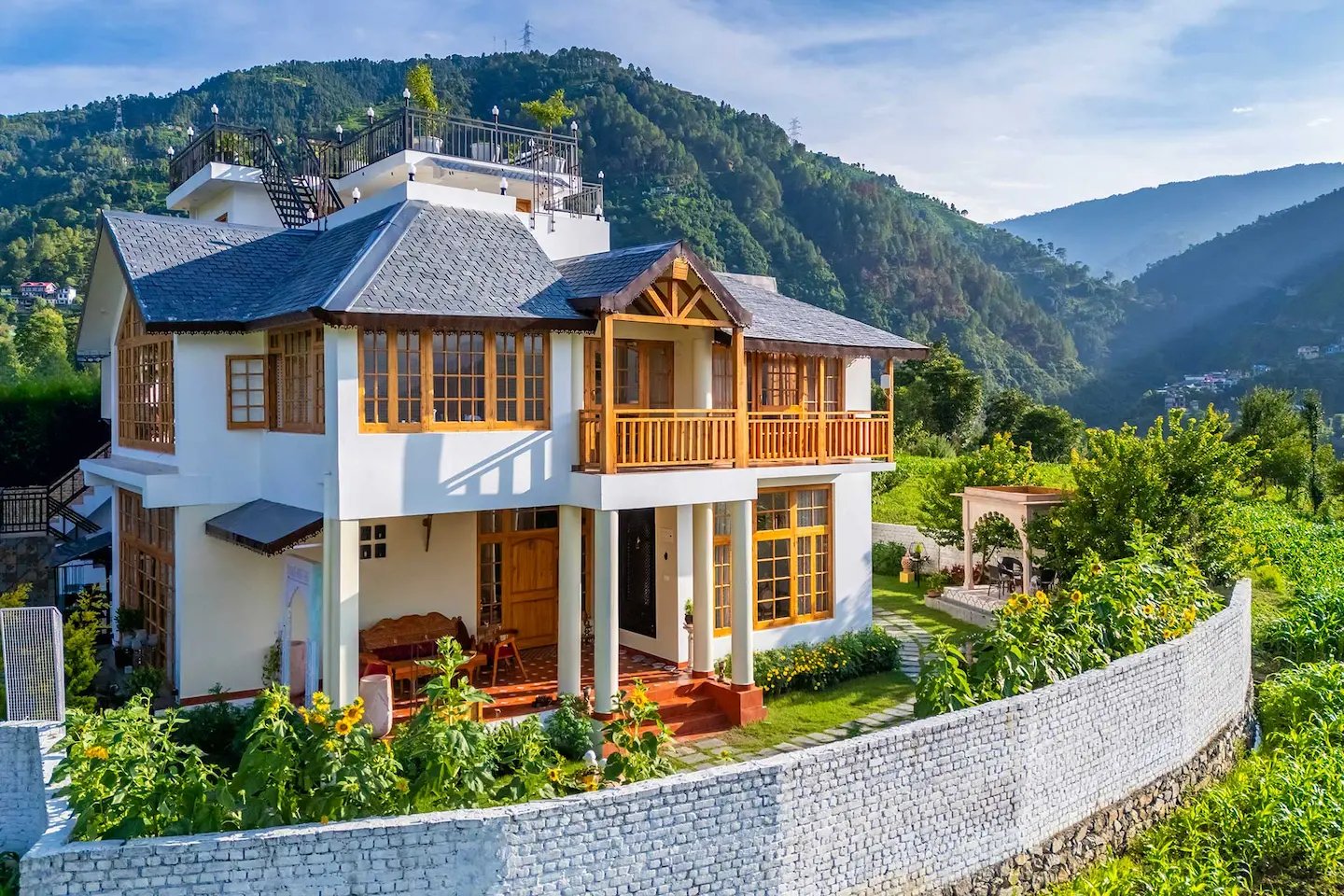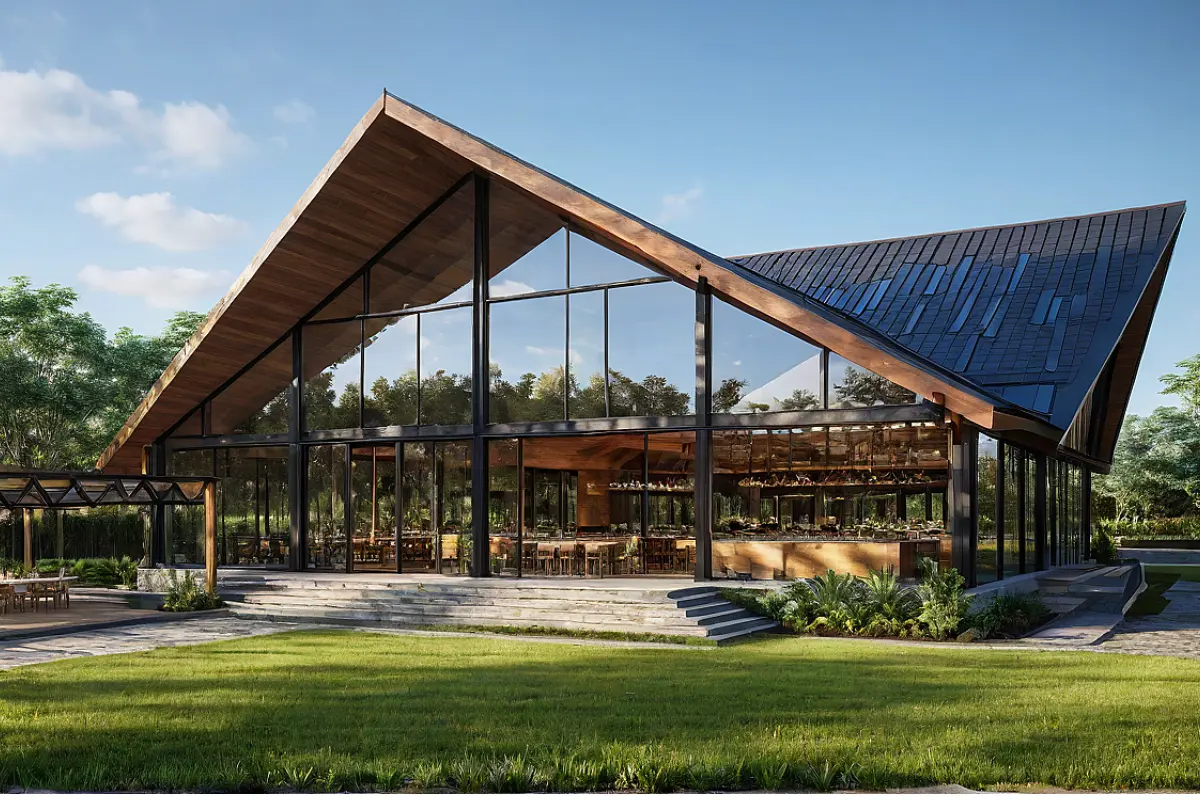
A great resort is not a hotel that happens to have a garden. It is a piece of land, carefully read, and then choreographed so that every arrival, every view, and every quiet corner feels inevitable. That choreography is what resort design is really about.
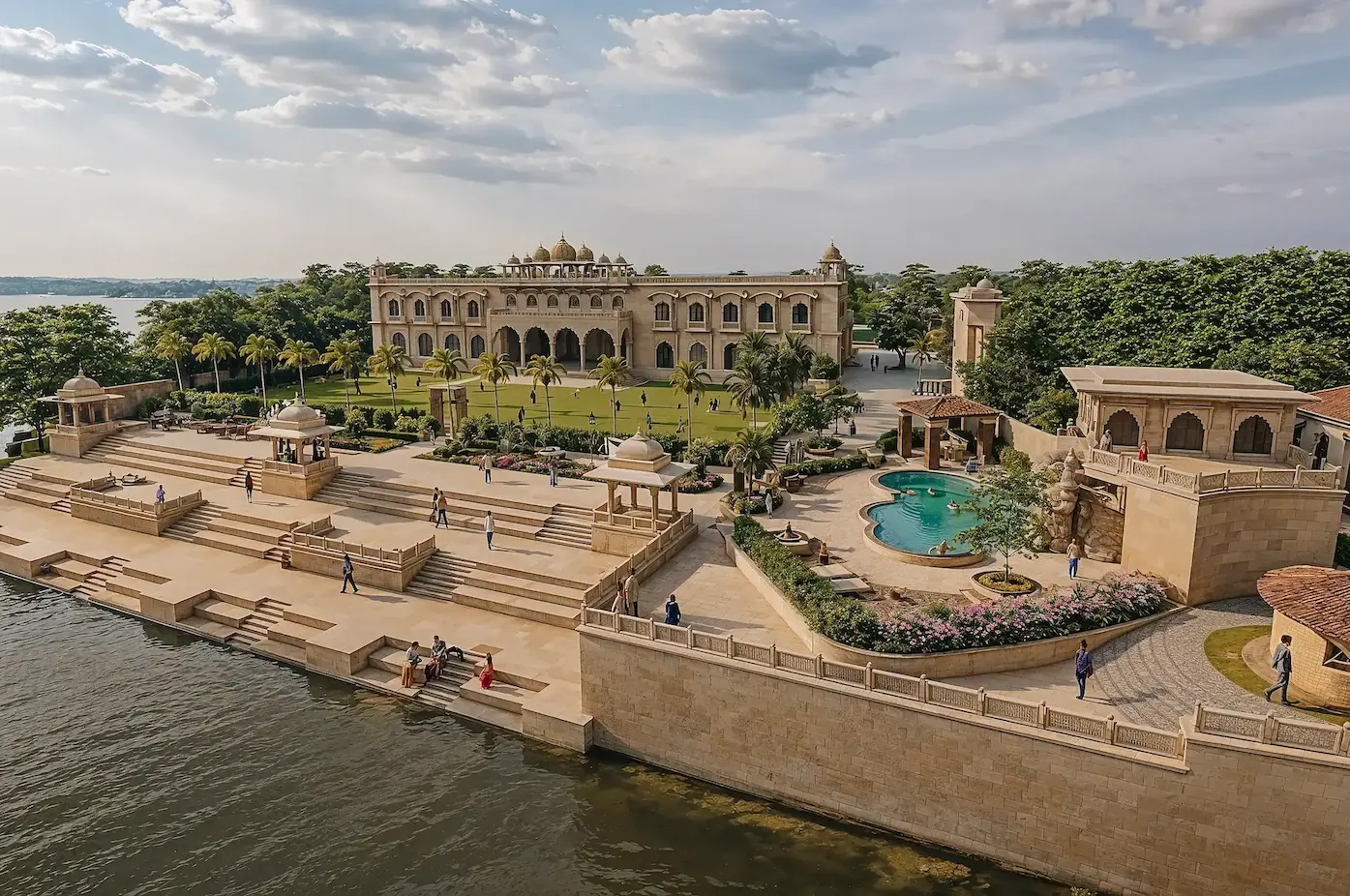
Over the years our studio has designed hospitality projects ranging from a hill retreat in Chamba to a wellness resort on the banks of the Sangam at Prayagraj. The clients are different every time — a hotelier, a landowner sitting on a beautiful but tricky plot, a family converting an orchard into a boutique getaway — but the questions are always the same. Where do the buildings go? How many rooms can the land carry? What will it cost to build? And what makes guests choose this resort over the next one?
This guide walks through how resort design and architecture actually works in India — from reading the land and planning guest flow, to costs per key, approvals, and the wellness and sustainability trends shaping resorts in 2026. It is the same thinking we bring to a real project brief.
Start With the Land — Site Selection & Master Planning
Everything in resort design begins with the site. A city hotel can succeed on a small, expensive plot by stacking rooms efficiently and selling convenience. A resort sells the opposite — space, calm, and a sense of place — so the land is not just where you build, it is the product itself.
Before a single line is drawn, a good architect reads the site for its topography, views, sun path, prevailing breeze, water, mature trees, and access. Which way does the best view face? Where does the morning light fall? Where is the land too steep to build, and where does it naturally invite a pool or a lawn? On a hill site, the slope dictates almost everything; on a riverfront, the relationship to the water becomes the spine of the whole plan.
The Five Zones Every Resort Master Plan Needs
Master planning is the art of placing the right thing in the right place — and keeping guests and operations from colliding. Almost every resort organises around five functional zones:
- Arrival & reception — the gateway, drop-off, lobby and the first framed view that sets the tone. The arrival sequence should reveal the resort slowly, not give everything away at the gate.
- Public & F&B — restaurants, bars, banquet and event lawns, kept close to arrival so day-guests and events never have to pass through the accommodation.
- Accommodation — the rooms, suites or villas, pushed toward the best views and the quietest part of the land, with privacy between units. For room sizes by category, see our standard hotel room size guide.
- Recreation & wellness — pool, spa, gym, activity zones and gardens, the experiential heart that increasingly drives the booking decision.
- Back-of-house — kitchens, stores, staff housing, laundry, services and plant. Invisible to guests but the engine of the resort — and the zone amateurs forget until it is too late.
The single most important rule of master planning is the separation of the guest journey from the service journey. Guests should glide through landscaped paths and framed views; staff, supplies and waste should move on their own back-of-house routes that guests never see. When those two flows cross, the magic breaks.
Designing the Architecture — Climate, Context & Experience
Once the master plan fixes where things go, architecture decides how they feel. In a resort, that feeling is shaped by three things working together: the local climate, the local context, and the constant dialogue between indoors and outdoors.
Designing for the Indian Climate
India is not one climate but several — the dry heat of Rajasthan, the humidity of the coast, the cold of the Himalayan foothills. Resort architecture that ignores this ends up fighting the weather with mechanical systems and enormous running costs. Climate-responsive design does the opposite: deep verandahs and overhangs for shade, cross-ventilation through rooms, courtyards and water bodies for evaporative cooling, thick or insulated walls on exposed faces, and orientation that welcomes winter sun while blocking harsh summer glare. A well-designed resort stays comfortable for much of the year on breeze and shade alone — which is also exactly what eco-conscious guests now expect.
Villas vs Room Blocks — Choosing the Right Density
One of the biggest early decisions is the accommodation format. Room blocks — two or three storeys of rooms along a corridor — are efficient, cheaper per key, and right for mid-scale resorts and event-driven properties. Standalone villas or cottages cost far more per key but deliver the privacy, private decks and direct-to-landscape living that luxury and wellness guests pay a premium for. Many successful resorts blend the two: a compact core of rooms near the public areas, and a scatter of premium villas in the quietest, best-view pockets of the site.
Density follows directly from this choice. For a comfortable low-rise resort in India, 6–12 keys per acre is a healthy range; luxury villa resorts often drop to 4–8 keys per acre to protect privacy and greenery. Push the density much higher and you slowly destroy the very spaciousness guests are paying for. Density should be set by the experience you want to sell — not by the maximum number of rooms the bylaws will allow.
"On our hill resort at Chamba, the slope and the views did the designing for us. We stepped the buildings down the contour so every room looks out over the valley, kept the roofs low and local in material, and let the architecture disappear into the hillside instead of imposing on it."
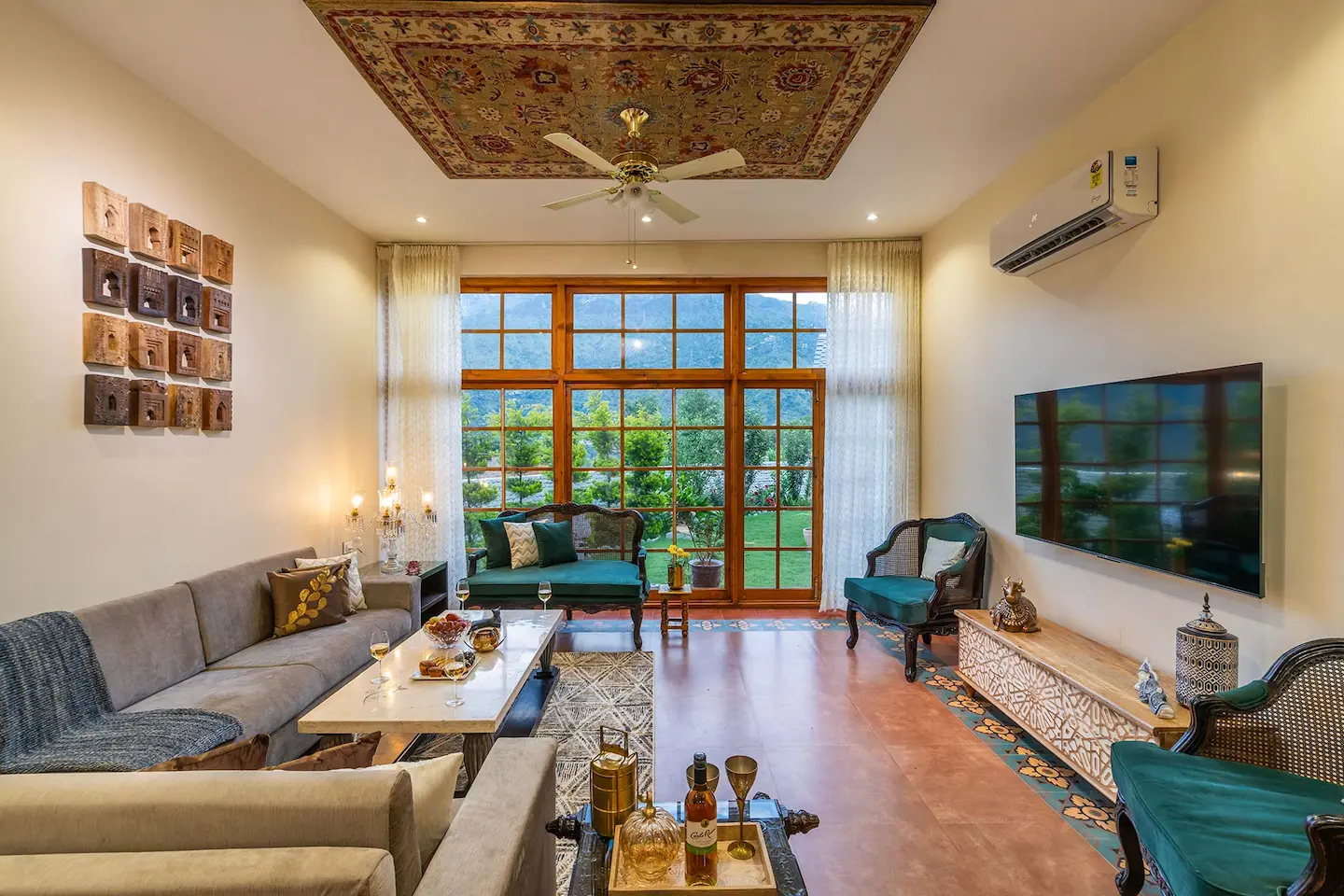
Context is the final layer. The best resorts feel like they belong to their place — built with local stone, timber or craft, echoing regional rooflines, and telling a story that a guest could not get anywhere else. A glass box that could be in any country is a wasted opportunity. Vernacular, contextual resort and hospitality architecture is both more memorable and, usually, more sustainable.
What It Costs to Build a Resort in India
Cost is the question every resort client asks first, and the honest answer is: it depends enormously on positioning, location and terrain. That said, the industry works in cost per key — the all-in construction cost of one sellable room, including its share of the public areas, landscape and services. The ranges below exclude land and are realistic ballparks for the Indian market; treat them as a starting point for a proper feasibility study, not a quote.
| Resort Positioning | Cost per Key (excl. land) | Built-up Cost |
|---|---|---|
| Mid-scale / 3-star | ₹35–60 lakh | ₹3,000–4,500 / sq ft |
| Upscale / 5-star | ₹1–1.8 crore | ₹6,000–9,000 / sq ft |
| Luxury / boutique | ₹1.5–3.5 crore | ₹9,000–15,000+ / sq ft |
A few things move these numbers. Terrain is the big one — building on a steep hill or a remote site can add 20–40% over an easy flat plot because of foundations, retaining and logistics. Landscape, water and wellness facilities are a real line item in resorts, often 10–20% of the build, not an afterthought. And villas cost more per key than room blocks because every villa carries its own walls, roof, services and deck.
On timelines, design and approvals typically take 4–9 months, and construction of a full resort runs 18–30 months depending on size and access. Many developers build in phases — opening with a core of keys and the main restaurant, then adding villas, spa and recreation as cash flow and occupancy grow. Phasing protects the budget and lets the resort start earning sooner.
Approvals, Land Use & Eco-Sensitive Zones
Resort projects in India sit at the intersection of several regulatory regimes, and getting the approvals path right at the start saves months later. The specifics vary by state, so everything here must be verified locally — but the common building blocks are:
- Change of land use (CLU) — most resort sites start as agricultural land and must be converted to commercial or tourism use before you can build.
- State tourism registration — registering the project with the state tourism department, which in many states also unlocks incentives, subsidies or single-window clearance for hospitality projects.
- Building-plan approval & fire NOC — sanction of the architectural drawings by the local authority, with a fire No-Objection Certificate under the National Building Code (NBC 2016).
- Environmental clearance — building and construction projects generally need an EC once the built-up area crosses the EIA threshold (commonly 20,000 sq m), with stricter scrutiny at larger scales.
- Eco-sensitive & hill rules — sites in the hills or near national parks, sanctuaries and forests fall under eco-sensitive zone (ESZ) and state hill-development rules that restrict building height, slope cutting, tree felling and density. These are especially relevant for resorts in Uttarakhand, Himachal and similar states.
The practical takeaway: engage an architecture firm that has navigated hospitality approvals before, and map the regulatory path during site selection — not after you have bought the land. A beautiful plot inside an eco-sensitive zone with a tight height cap is a very different project from one without those constraints.
Sustainability & Wellness — Where Indian Resort Design Is Heading
The Indian resort guest of 2026 is looking for more than a comfortable room. Two forces are reshaping what gets built:
Sustainability has moved from marketing to expectation. Eco-resorts built with local materials, passive cooling, rainwater harvesting, solar power and minimal site disturbance are no longer niche — they command premium rates precisely because guests want to feel their holiday isn't costing the planet. Biophilic design — bringing nature, water, daylight and greenery deep into every space — is now a baseline, not a luxury.
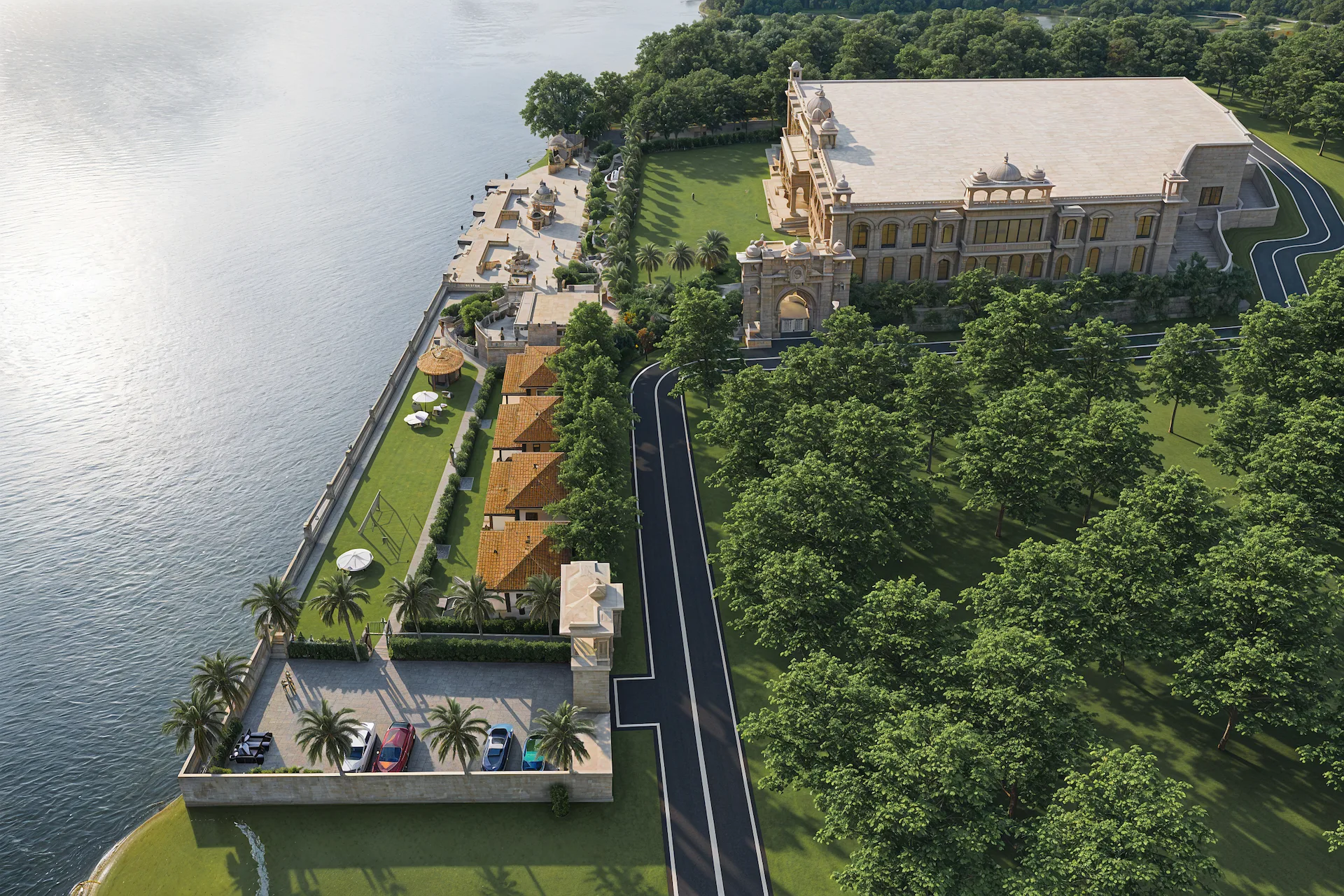
Wellness is becoming the organising idea, not an amenity. The fastest-growing category in Indian hospitality is the wellness resort, where the spa, yoga pavilion, treatment rooms and quiet landscape are the reason guests come, with the rooms arranged around them. Designing a wellness resort means planning for silence, privacy, natural materials and unhurried movement from the very first sketch — which is exactly the thinking behind a project like our Sangam Pooja Wellness Resort in Prayagraj.
Alongside these, guests increasingly want experiential, rooted design — resorts that feel specific to their region through local craft, cuisine, materials and stories, rather than a generic international look. The resorts that will win the next decade are the ones that feel unmistakably of their place.
Five Mistakes That Sink Resort Projects
For every resort that works, several disappoint — and the failures usually trace back to the same avoidable errors:
- Over-density — cramming in too many keys to chase revenue, and destroying the spaciousness that justified the room rate in the first place.
- Poor guest flow — making guests walk past the kitchen bins or cross a service road to reach the pool, because the master plan never separated guest and service journeys.
- Ignoring back-of-house — undersizing kitchens, stores and staff facilities, so the resort can never actually operate at the quality its brochure promises.
- Fighting the site — flattening a beautiful slope, cutting mature trees, or turning the best view into a parking lot because the buildings were placed before the land was understood.
- No phasing or feasibility — building everything at once with no financial model, instead of phasing the build to match cash flow and occupancy.
Every one of these is a design and planning decision, made long before construction starts. That is precisely why the early architectural thinking — site reading, master planning, feasibility — is the highest-leverage money you will spend on a resort.
Frequently Asked Questions
How much does it cost to build a resort in India?
Excluding land, a mid-scale (3-star) resort typically costs ₹35–60 lakh per key, an upscale 5-star resort ₹1–1.8 crore per key, and a luxury or boutique resort ₹1.5–3.5 crore per key. On a built-up basis that is roughly ₹3,000–4,500 per sq ft for 3-star, ₹6,000–9,000 for 5-star, and ₹9,000–15,000+ for luxury. Terrain, finish level and the share of budget spent on landscape, water and wellness move these numbers significantly.
How many rooms or keys can you build per acre?
For a comfortable low-rise resort in India, 6–12 keys per acre is a healthy density. Luxury villa resorts often go lower, at 4–8 keys per acre, to protect privacy and landscape. Going much denser usually erodes the sense of space and calm that guests pay a premium for, so density should follow the experience you want to deliver, not just the maximum the bylaws allow.
What approvals are needed to build a resort in India?
Most resort projects need a change of land use (CLU) from agricultural to commercial or tourism use, registration with the state tourism department, building-plan approval with a fire NOC under the National Building Code, and an environmental clearance if the built-up area crosses the EIA threshold (generally 20,000 sq m). Projects in hills or near national parks and sanctuaries also fall under eco-sensitive zone and state hill-development rules. Requirements vary by state and must be verified locally.
How long does it take to design and build a resort?
Design and approvals usually take 4–9 months, and construction of a full resort takes 18–30 months depending on size, terrain and access. Many resorts are built in phases — opening with a core of keys and the main public areas, then adding villas, spa and recreation as occupancy grows. Hill and remote sites take longer because of shorter working seasons and harder logistics.
What is the difference between resort architecture and hotel architecture?
A city hotel stacks rooms efficiently on a small, expensive plot and sells convenience. A resort sells experience, space and a sense of place — so the architecture spreads horizontally across the land, choreographs a journey of arrival and discovery, dissolves the line between indoors and outdoors, and is shaped by the landscape, climate and local culture. Master planning and guest flow matter far more in a resort than in a city hotel.
Designing a Resort Worth Travelling For
A resort succeeds or fails in the decisions made before the foundations are poured: how the land is read, where the zones sit, how guests move, how the architecture answers its climate and culture, and whether the numbers are honest. Get those right and the building almost designs itself — and runs profitably for decades. Get them wrong and no amount of expensive finishes will fix it.
If you are planning a resort, hotel or wellness retreat anywhere in India — from the hills of Uttarakhand to a riverfront or an orchard you already own — and want to understand what your specific site can carry, what it would cost, and what it could become, talk to our studio. We start every hospitality project the same way: by reading the land before we draw a line. You can also explore our resort & hotel architecture practice to see how we work.